

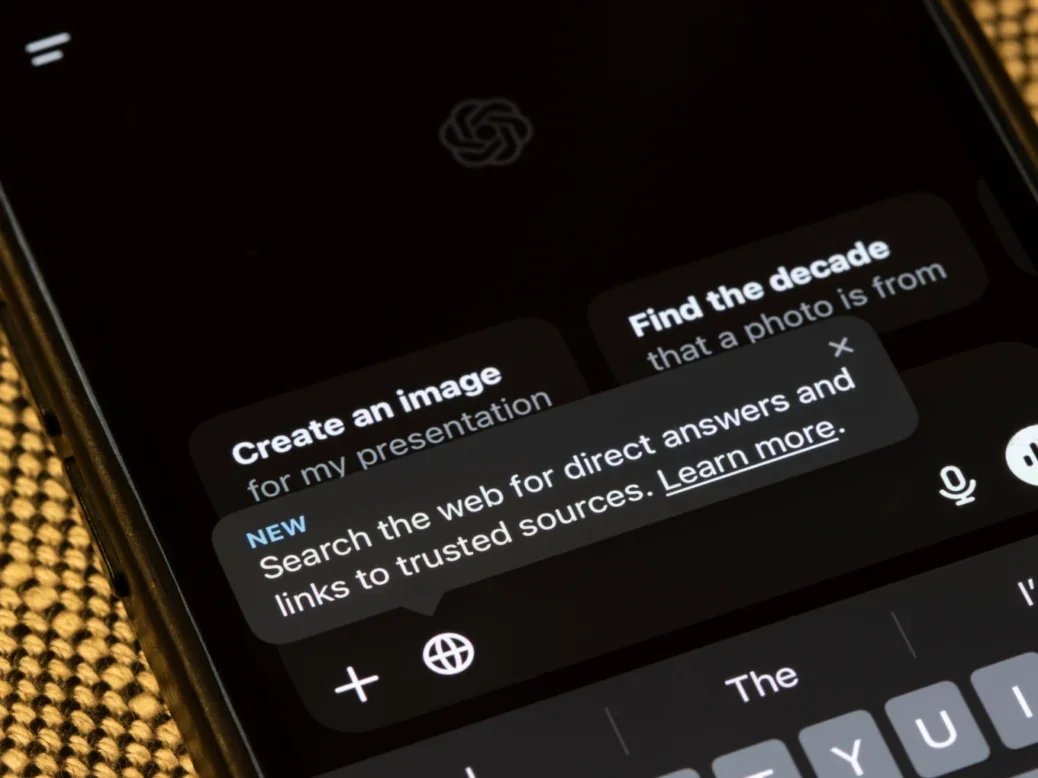
The company behind ChatGPT has no plans to share advertising revenue with publishers, OpenAI’s vice president of media partnerships has confirmed.
Varun Shetty was asked at the WAN-IFRA World News Media Congress in Marseille on Tuesday whether they are considering a revenue share model on publisher content being surfaced next to adverts, which are being trialled on ChatGPT.
Shetty responded: “Not at this point.”
[Read more: New York Times chief: How and why publishers should fight AI ‘tsunami’]
ChatGPT rival search tool Perplexity began sharing ad revenue with publishers in late 2024 but has since removed advertising from its platform over concerns this can impact trust.
Prorata AI has said it will share 50% of advertising revenue generated with the publishers whose content appears in the AI answers alongside it.
Shetty also told publishers he did not see traffic as the “core value” for publishers appearing within ChatGPT search, a feature within the AI answer engine that began to roll out in October 2024.
But he said that OpenAI hears anecdotally from publisher partners that “even though the overall level of traffic we’re driving might be lower than publisher expectations, the quality can be higher, whether that’s people staying on the site and staying on the site for longer or being more likely to subscribe”.
Some publishers have reported similar findings to Press Gazette, including B2B visitor attractions brand Blooloop which is highly cited in ChatGPT. Co-founder Charles Read said people who click through from ChatGPT “spend longer on the site on average than other people” and it is therefore valuable to be on the platform even if traffic goes down overall.
Shetty said they are “trying to strike the balance” between “showing enough of a response to make sure the user feels like their query has been answered, but creating the opportunities to click through and go read the original reporting, and people might do that for a variety of reasons if they’re very interested in a topic”.
He also suggested they are looking at creating a “slightly more differentiated news experience than we have for the remainder of our search product”.
Publisher AI conversation ‘fail to capture progress’
Shetty said that in ChatGPT search they have “built a product that highlights trusted journalism, that cites it, attributes it, and provides an opportunity for users to click over to the original source.
“Now, we have to see how many users will click over to the original source. User behaviours are changing, but we are trying to create as many opportunities as possible for that to happen.”
He said they want ChatGPT to be “the best personal assistant that you can imagine” and that this “should help with engagement and retention for your loyal readers”.
He added: “I think over time we will understand more about our users, we’ll understand which sources they prefer and will like to see that will help us deliver more value back to publishers.”
Shetty described that as one “bucket of value” for publishers, saying that another is the OpenAI technology that publishers can incorporate into their own workflows and products.
Talks with publishers making ‘progress’ (despite lawsuits)
A day earlier at the World News Media Congress New York Times chairman and publisher AG Sulzberger accused AI companies of committing “brazen theft” of intellectual property which he labelled “abuses”.
The New York Times is currently suing OpenAI for alleged copyright infringement, so Shetty and the AI company’s chief of intellectual property and content Tom Rubin did not take any questions about Sulzberger’s comments.
But in a veiled reference Shetty described “a nuanced conversation” between OpenAI and publishers that is “too easily and too often, including on this stage at this Congress, can be painted in broad, generalisable brush strokes that fail to capture so much of the progress that we’ve made together, and the possibility around the work that we could do together”.
Shetty also said OpenAI’s “fundamental principle in working with the news industry is to support a healthy news ecosystem, to be a good partner, and create mutually beneficial opportunities” and that they have made “real investment” in journalism.
OpenAI has agreed licensing deals with the likes of The Washington Post, News Corp, The Guardian, Financial Times, People Inc, Schibsted, Axios, Time, Future, Hearst, Conde Nast, Vox Media, Le Monde and Axel Springer.
As well as The New York Times, it is being sued by other publishers including Alden Global Capital local newspapers, Ziff Davis, a coalition of Canadian news outlets, another group in India and US News & World Report.
Why small and medium publishers can’t get OpenAI deals
Ezra Eeman, WAN-IFRA’s AI in media lead who was moderating the session, asked Shetty: “Most of the publishers here don’t have a deal, they might never have a deal. What’s your approach for this in the future?”
Shetty noted that ChatGPT search is [quite new] and said that in choosing partners they had to “make sure that it is appealing to people at the beginning….
“We looked at our priority markets, where we saw lots of ChatGPT usage, and we said if we’re going to launch a search product in these markets, then we should make sure that we have relationships with at least a few trusted quality publishers in those markets, so we had a prioritisation discussion, essentially, and made some choices to get the product off the ground.”
He added that overall OpenAI is looking for publisher partners that are “interested in deep strategic relationships with us, that want to incorporate our tech into how they think about the future of their organisation. If you think about the direction of travel for OpenAI over the last few months, it has certainly been around enterprise transformation, but we also have close to a billion users using our consumer product on a weekly basis, and there we want to partner with publishers who were excited about experimenting with this new audience, this new format.
“Now, I know that description probably described many publishers in this room, and that’s where there’s a sort of a prioritisation and realistic and pragmatic approach that we had to take in terms of which markets were focused on, which user needs were focused on, and how we can grapple with those opportunities.”
Email pged@pressgazette.co.uk to point out mistakes, provide story tips or send in a letter for publication on our "Letters Page" blog
