

Copyright law has been weaponised to silence reporting around the world and Google is allowing this to happen
Last month, an entity called DRF Corporation (or someone anonymous acting on its behalf) filed a request under the US Digital Millennium Copyright Act against a Press Gazette story which contained criticism of casino SEO company Clickout Media. It immediately vanished from Google search results after DRF falsely claimed it was copied from a Reddit post about another subject entirely.
Both articles were reinstated after a few days – but sometimes DMCA take-downs can take weeks to reverse. In both cases Press Gazette received no notification from Google about the move, and was instead alerted by SEO professionals following the story.
It was one of more than 10,000 requests filed by DRF Corporation, each of which represents a web page potentially scrubbed from Google Search.
DMCA Copyright ‘strikes’ have become a rapidly growing tactic used by rogue organisations to manipulate Google Search, by corporations to stifle reporting and by repressive regimes to silence criticism.
US-based tech platforms are complying with DMCA requests to suppress legitimate journalism globally.
Anyone can file a ‘takedown’ request, without proving who they are, and without even proving they have a valid claim, and Google often instantly removes any material complained about from Search.
Insiders in the SEO industry have told Press Gazette that rogue operators routinely target articles they dislike with multiple requests, and can take down the same URL multiple times – often without the publisher even being informed.
In 2023, articles on UK investigative journalism website Byline Times were hit by bogus DMCA take-down requests multiple times relating to reporting about Russia. In this case multiple authors copied Byline Times articles and then published them online to backdated articles before falsely claiming copyright infringement.
Repressive regimes use DCMA take-down notices
Repressive regimes in Nicaragua, Ecuador and Tanzania are already using false DMCA takedowns to silence activists and journalists, according to campaigning group Access Now.
In Nicaragua, for example, media outlets received copyright takedown requests for publishing speeches by Nicaragua president Daniel Ortega on the basis that they did not own copyright in a bid to silence criticism.
The videos were eventually restored.
Research cited by Courtney Radsch, now Director of the Center for Media and Digital Governance at the Open Markets Institute, in a report for the Centre for International Governance Innovation suggests that a third of journalists in the global south or working from exile have been targeted with bogus DMCA requests.
Speaking to Press Gazette, Radsch says that in America there are reports of police playing popular copyrighted music during arrests so that if someone is filming, it deters their ability to get through content filters – or police can trigger a DMCA request to have material removed.
Radsch says she first got interested in the topic because she was working with two Nicaraguan journalists.
She said: “As I got to know their story and about how they had been targeted by the state, their archives were taken down, all this stuff using DMCA requests.
“Then I found out that actually this is common, commonly weaponised against independent media around the world by either authoritarian regimes or people who don’t want whatever they’re writing about to be out in the public sphere, or by PR firms in the private sector.”
Research cited by Radsch suggests that 100 reviewers at Google deal with more than a million DMCA requests per day.
Radsch says that there are reports of ‘black ops’ PR firms using information operations to remove negative coverage of clients, often relying on DMCA requests.
Such firms are also believed to remove coverage of rivals, she says.
She points out that while Google indexes all DMCA requests, other platforms such as Meta do not.
She says a first step towards a fairer DMCA system should be to index all requests – but also to enforce the provisions of the act.
She said: “It is a felony to file an erroneous, false claim, and as far as I could tell, that’s never been used against in any of these cases of targeting journalists. So I think that we need to ensure that it should actually be enforced.
“At present they don’t have to provide any evidence. My understanding is they don’t even have to provide necessarily a real name because you’ll see law firms and PR firms doing this on behalf of others.”
She said sites such as Sahara Reporters found their content taken offline – but were unable to work out who had filed DMCA requests against them.
She said: “I think if you’re filing a claim against a journalistic outlet, you should provide evidence of your copyright and you could do things like putting on limits of how many claims can be filed one time to stop these massive DMCA takedown efforts.”
Critic of Clickout Media hacked on Linkedin
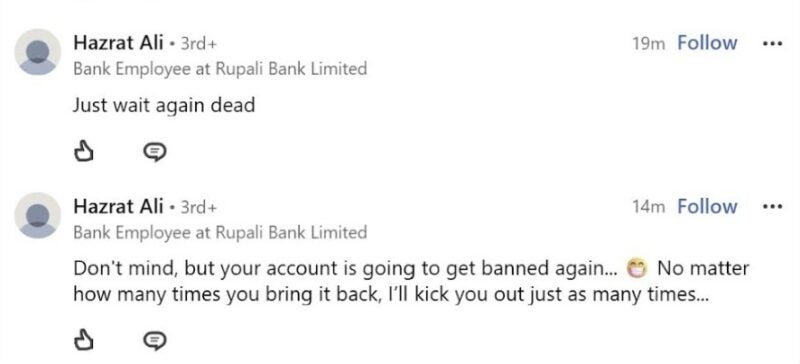
Other critics of Clickout Media say they have been targeted with account bans and hacks on Linkedin after criticising the company.
One SEO executive who speaks out on bad practices in the gambling industry reposted Press Gazette’s latest report about Clickout Media on 19 June to Linkedin.
The post was removed by the platform.
Speaking to Press Gazette, the executive (who asked to remain anonymous for fear of being further targeted for speaking out) said they have expertise in DMCA strikes and the tactic is commonly used to silence critics of companies and rival iGaming sites.
The executive said: “Most people do not know how to recover such an attack efficiently and stack it in the system for weeks or months.
“The burden of proof is on the attacked party. In iGaming, we are seeing thousands of these a day and people are desperate. It is a negative SEO tactic and the problem is, it is free.”
They added: “Fake DMCAs cost you only a bit of time, automation and a part of your soul. DMCAs are more efficient than any other negative SEO attacks and Google is doing nothing about fixing this system.”
The executive said that in the wake of criticism of Clickout, their Linkedin account was targeted by hackers.
They said: “My account was attacked several times successfully (all attacks came from Bangladesh), Linkedin security is buggy and the attackers got through even after me changing email, phone, password (several times), enabling 2FA and having a biometric passkey.”
The executive said that in the wake of the attack, they were sent a message warning they would “never get back” into the LinkedIn account.
US online copyright law not working for anyone
The Digital Millennium Copyright Act (DMCA) came into force in 1998 and aimed to bring intellectual property rights into the digital age.
The Act protects internet companies such as search engines from being sued for copyright infringement being committed by users by creating a regime which means when they are notified infringing content is on a platform, they must immediately remove or disable access to it.
When a DMCA claim is submitted, there is no requirement for Google or other platforms to decide if it is valid, or even if the person filing the claim is real.
When a DMCA take-down is challenged, the platform has to wait 10 to 14 business days to allow the DMCA claimant time to file a federal lawsuit in the US – meaning appeals are a lengthy process.
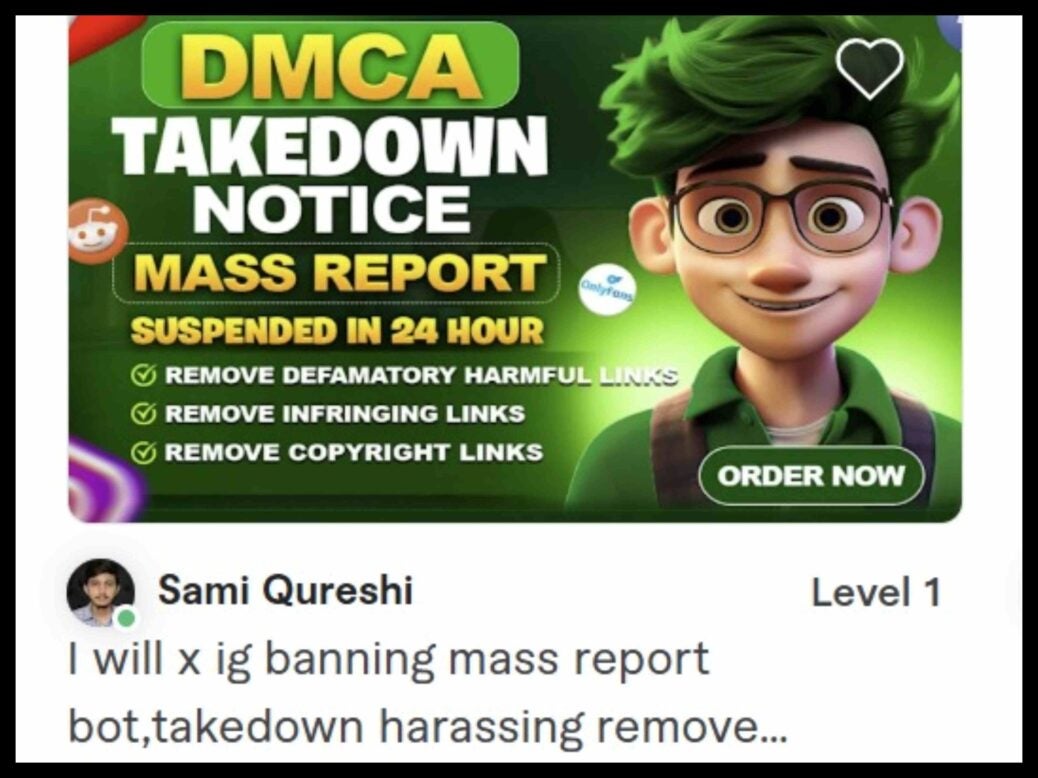
On platforms for freelance workers such as Fiverr, dozens of profiles in countries such as India and Bangladesh offer DMCA takedown services for as little as 20 Euros per request (see main picture).
The services have descriptions such as “DMCA Takedown Notice – Mass report, remove defamatory harmful links” with many offering a “100% safe process” and 24-hour support.
Pedro Dias, a former Google Search quality specialist who worked for the company for six years, said that he still sees the same problems in Google search that were rife 20 years ago.
He says that DMCA takedowns are an increasing problem due in part to automation making it easier to file thousands of complaints at once.
He told Press Gazette: “Google doesn’t do much to verify the people making the requests are who they say they are. They might just ask you to confirm that what you are submitting is is legal and truthful, and people will say yes, it is.
“With mainstream adoption of AI and automation businesses can set up a lot of automated claims. They will throw like 1,000 claims at Google, if 10 stick, you know that’s going to be a win for them.”
Dias said: “They will attack the same URL with multiple DMCAs, and because the Google system kind of is broken, and sometimes you don’t even receive a notification for all your URLs that have been taken down, Google just has to comply with the law and say that we’ve swiftly removed whatever we’ve been asked to remove. But I think not having some kind of process in place where you check someone’s ID or if the claim is legitimate is bonkers.”
CEO of Axate Dominic Young (who is also one of the founders of the SPUR coalition on AI licensing standards) said the lack of consequences for false DMCA requests enables “bad acting by anyone who wants to perform censorship by making it consequence-free”. He added: “It essentially means that the whole internet is censored at a whim.”
He said: “It points back to the problem with the DMCA. They say Google’s not responsible until they’re aware, so they’ll just remove everything, and it’s up to the real content owner to do something about that, and compare that to a world in which the platform is responsible for what it publishes.”
The flipside of this, Young points out, is that platforms can allow people to publish copyright-infringing content freely on platforms such as YouTube until they are notified to take it down.
Both the people who publish the content, and the platform, begin profiting immediately.
Young said: “If you are a content owner, because no one has any liability until you tell them, you have a duty to proactively police the entire internet for copies of your content that other people have stolen, and the only thing you can do about it is get it taken down. You can’t really get any compensation or financial return, so that’s why no one enforces copyright, because how can you? How can you police the entire internet?”
Google declined to provide comment, but on a previous request, said: “Our main goal with DMCA removals is to strike a balance: we want to make it easy and efficient for rightsholders to report infringing content, while simultaneously protecting open access to information and fighting fraud. It’s worth noting that the vast majority of our DMCA removals come from reporters who already have a proven track record of submitting valid takedowns.”
Google recommends site owners sign up for Search Console to speed up appeals against false DMCA strikes.
Email pged@pressgazette.co.uk to point out mistakes, provide story tips or send in a letter for publication on our "Letters Page" blog
