

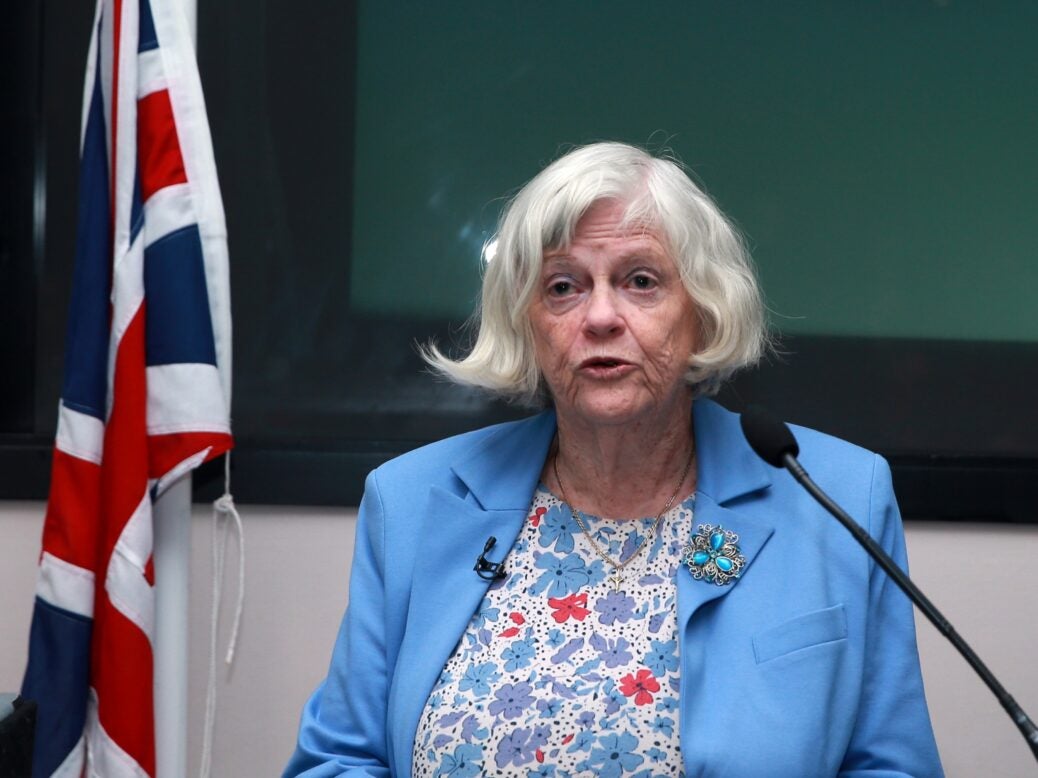
Any student journalist studying media law will have been puzzled by coverage following the killing of politician Ann Widdecombe which risked a breach of privacy for naming the suspect and went beyond normal reporting restrictions under the Contempt of Court Act.
Press Gazette asked media law experts to explain why publishers pushed boundaries with reporting of this case and why they are unlikely to face either civil actions for breach of privacy or attention from the Attorney General over Contempt of Court.
Privacy and naming the suspect before charge
A unnamed suspect was arrested in connection with the death of Widdecombe on 11 July and identified as a 28-year-old British man the following day.
Under new police media guidelines for England and Wales released in February, police can release details about the ethnicity of suspects in high profile cases to avoid misinformation spreading.
Since 2013 the UK College of Policing has said forces should not name arrested people until they are charged unless there are exceptional circumstances.
The Daily Mail was the first publisher to name the arrested man as Joshua Kerry on 17 July, three days before his charge.
Several nationals including the Mirror, The Times, and The Telegraph followed the Mail in identifying Kerry before his charge.
The BBC, The Guardian and Sky News were among outlets that waited until Kerry had been charged to identify him.
In 2018, Cliff Richard‘s landmark privacy win against the BBC set a precedent that suspects can claim damages for breach of privacy if they are named before charge.
This was followed by two similar rulings: against the Mail Online for naming a man arrested over the 2017 Manchester Arena terror attack who was never charged, and against Bloomberg for identifying an anonymous businessman in a confidential letter.
Breaches of privacy can be justified in the public interest. The Mail may also have decided the likelihood that the man would be charged made it safe to name him. Once charged, any prospect of the man claiming damages for being named a few days earlier disappears.
Widdecombe case reporting and Contempt of Court Act 1981
The Contempt of Court Act 1981 imposes strict conditions on crime reporting once a person has been arrested and/or charged.
Publishers are barred from publishing anything which could influence a jury at a future trial, particularly material which implies a suspect is guilty.
Automatic reporting restrictions apply at pre-trial court appearances and normally limiting coverage to details such as names and addresses of defendants, charges and bail arrangements.
After Kerry was charged on 20 July, Frank Ferguson, chief crown prosecutor of the CPS Special Crime and Counter Terrorism Division, said: “We remind all concerned that proceedings against the defendant are active and he has the right to a fair trial. It is vital that there should be no reporting, commentary or sharing of information which could in any way prejudice these proceedings.”
Reports of Kerry’s initial court appearance on 21 July included far more detail than is normally allowed under automatic reporting restrictions: including the allegation she was hit with a hammer 21 times and the fact the attack was caught on camera.
‘High bar for contempt’
David Banks, media law consultant, told Press Gazette: “When it comes to reporting and national newspapers and broadcasters and websites pushing the boundaries, it’s quite a high bar for contempt,” he said, adding, “we haven’t seen a lot of contempt prosecutions.”
“This is an extraordinary case. It’s going to obviously attract an awful lot of attention, both from traditional media and from outside media.
“We’ve had David Amess, we’ve had Jo Cox, and now we’ve had Ann Widdecombe. And although Ann Widdecombe wasn’t a serving MP, she was clearly in that category of person. She was very prominent and well-known, literally a household name.
“So it may well be… that they think that trying to suppress commentary and coverage and things like this in the wake of such an extraordinary offence was unrealistic, and so there’s no point in issuing these warnings because mainstream media might behave themselves a bit, but you can’t do anything about social media.”
Banks said that the contempt of court act is currently in the process of being modernised by the Law Commission for “precisely these situations”.
[Read more: What contempt of court reform proposals mean for publishers]
The proposed framework will aim to protect trials with clearer definitions of contempt, replacing the “confusing” distinction between civil and criminal contempt with four new categories.
Because arrests are currently treated as private, and therefore secret, it has become hard for publishers to know if their reporting is potentially risking contempt of court.
Media law tutor and commentator Charlie Moloney said that the attorney general and the current government “don’t really seem that interested in actually doing anything” about contempt of court in high-profile cases, with the last high-profile case where a publisher was fined for contempt in 2022, when the BBC broadcast a clip of a court hearing online.
He also referenced a high-profile case involving politician Robert Jenrick where he was accused of contempt in a murder trial, but was excused after deleting his social media post.
Email pged@pressgazette.co.uk to point out mistakes, provide story tips or send in a letter for publication on our "Letters Page" blog
