

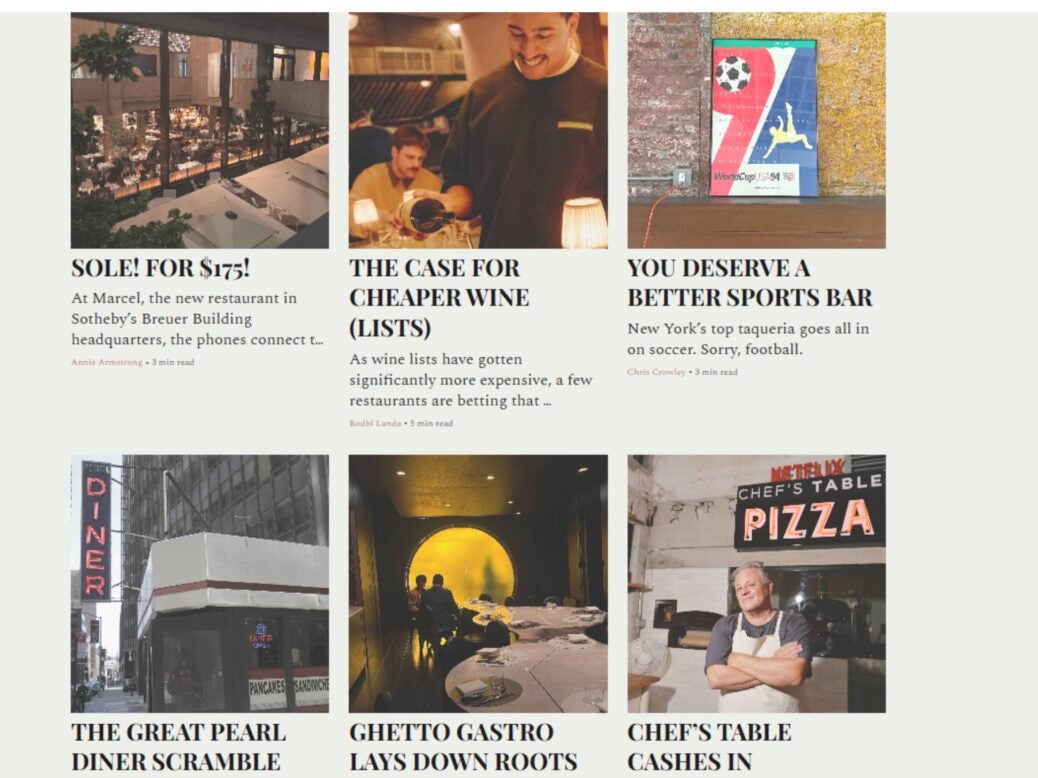
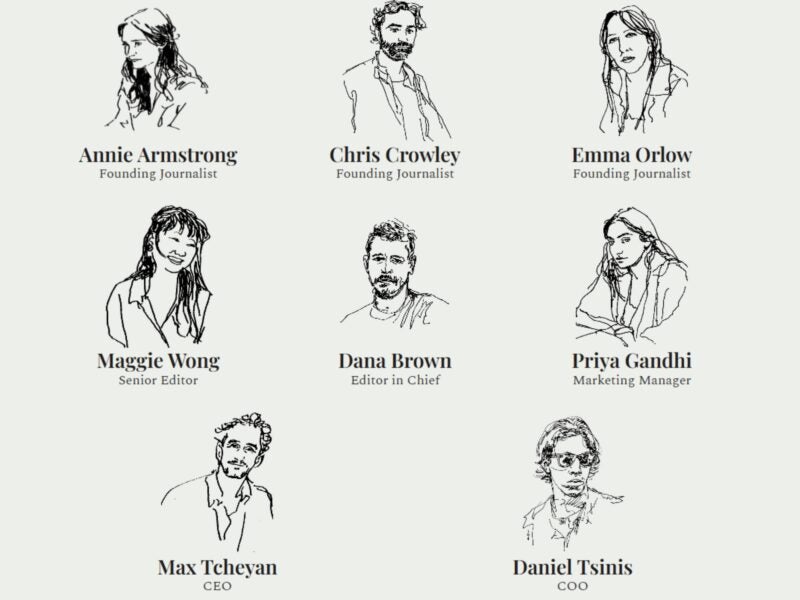
A media company covering the business of food, restaurants and hospitality in New York “and beyond” has launched with eight full-time salaried staff after a $2.5m (£1.8m) seed funding round.
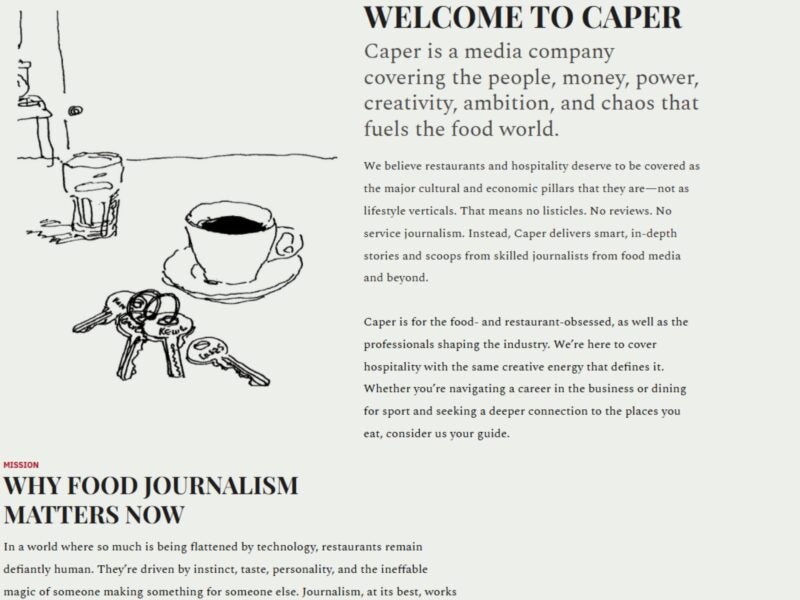
Caper has been set up by two of the founders of newsletter-based publisher Puck, Max Tcheyan and Dan Tsinis, along with former Vanity Fair deputy editor and Air Mail columnist Dana Brown. It plans to focus on “in-depth stories and scoops”, avoiding reviews and listicles.
Investment in the title began in the autumn so it could launch with “the right founding journalists”, Tcheyan, co-founder and CEO of Caper, told Press Gazette, adding the business model offers staff revenue-linked bonuses and equity participation in the company on top of a competitive salary.
This means Caper’s staff are compensated more like tech startup employees than journalists at traditional publications, which allows Caper to compete with those institutions for top talent.
The Caper newsletter, sent three times a week, launched in February, followed by its website at the end of March. Monthly events will launch in April.
DNA from Puck and The Athletic
Caper fills “a gap in the market” by combining high-level journalism with food “from a product and business and revenue perspective from day one”, said Tcheyan.
Before founding Puck, Tcheyan was vice president of growth at The New York Times-owned The Athletic between 2017 and 2020.
He said: “I actually thought that food media looked a lot like sports media did in 2016/2017… it just felt like it had devolved into a lot of lists and rankings, and a lot of sites that were pretty much playing the search engine optimisation game more than anything.”
[Read more: The Athletic wants to be top soccer destination in US by 2026]
He said this approach was generally supported by an advertising model based on clicks and scale, not quality content.
“And then I also thought about what we had done at Puck and how we covered some of these professional worlds, and in a way that really spoke to the industry class.”
Caper draws from both Puck and The Athletic’s models, leaning into specialist journalism and partnering with its journalists.
This includes allowing its journalists to be equitised in the business and participate in the revenue with bonuses from subscriptions and other streams, a tactic also used at Puck.
For Caper, this has been taken further with a bonus through company goals and staff participation in developing IP.
“And then the business model itself – core subscription but also having the advertising and events side – is absolutely influenced from some of these previous stops,” Tcheyan added.
How Caper will make money
Caper is supported by a core revenue mix of subscriptions, events and advertising, with an aim to build “healthy revenue from all three”, said Tcheyan.
An annual subscription costs $99 (£73), currently discounted by 25% for an early adopter audience at $74.25 (£55), for full access to paywalled content.
A professional subscription, at $299 (£221) – $224.25 (£165) with discount – also gives access to information on professional hospitality products, exclusive invites to Caper’s in-person events and additional coverage on people and business. A chef subscription rate is also available on request.
“I think that we’re seeing good uptake on the annual [offer] and so we don’t want to necessarily introduce the monthly side of it just yet,” said Tcheyan.
Caper doesn’t disclose subscriber numbers, but Tcheyan said it prioritises “quality over quantity”, and is “on the right track” in its targeting of “hospitality executive, chef class and behind-the-scenes players” for its subscriber base.
“Getting the subscription side of it right is really important,” he said. “That just affords you recurring revenue, that can help stabilise the business where going out and signing a brand partner… is a different consistency.”
The newsletter, sent on Beehiiv, is anchored by one of Caper’s three founding journalists.
[Read more: Beehiiv CEO says platform on ‘very divergent path’ to Substack]
Though Caper is newsletter-centric, “the site is doing a decent percentage of direct traffic”, said Tcheyan, where content is published once a day and covers both breaking news and features. Features performing well include an underground cheese sample sale by a major New York supplier and features on the business models behind establishments including Time Out Market.
Events will generate revenue through sponsorships, starting with a chef competition to bring together hospitality executives, chefs and investors. These will also be “anchored in a non-food category” with ties to cultural moments: “We will activate around the US Open or around Fashion Week, or around some of these other cultural calendar events,” Tcheyan said.
Podcast and video are going to be looked at in the second half of this year.
“We want to make sure we’re publishing consistently, and get that muscle down first, and then I think we’ll move to some other mediums,” Tcheyan said.
Attaining high-end ad sponsors
Caper launched with luxury fashion brand Loewe as its advertising partner on its website and newsletter, followed by high-end tequila brand Comos for its next partner spot.
Caper presents “a new and different opportunity” for brands to be creative and is uniquely positioned to work with advertisers with its distinct editorial coverage – unlike conventional food media, Tcheyan said. Caper explores the real estate, media, art and cultural elements of food.
“So, you’ll see us move into some spirits and some more endemic advertisers that make sense. And then you can imagine that there are the reservation platforms, credit cards that have loyalty programmes that will make sense on the advertising side for us.”
Display ads are “very intentionally” placed on the site, while the newsletter carries direct-sold ads for sponsors.
Caper’s launch comes amid a wave of new food media startups, including The Guardian’s exanded food newsletter Feast and the creation of US-based Ravenous, a new food culture website founded by multiple ex-Eater writers.
“I’d like to believe that maybe we were just a little bit earlier than a lot of these and maybe it’s giving them a signal and confidence to launch themselves,” said Tcheyan, adding these titles are more consumer-based rather than Caper’s B2B approach.
Email pged@pressgazette.co.uk to point out mistakes, provide story tips or send in a letter for publication on our "Letters Page" blog
