

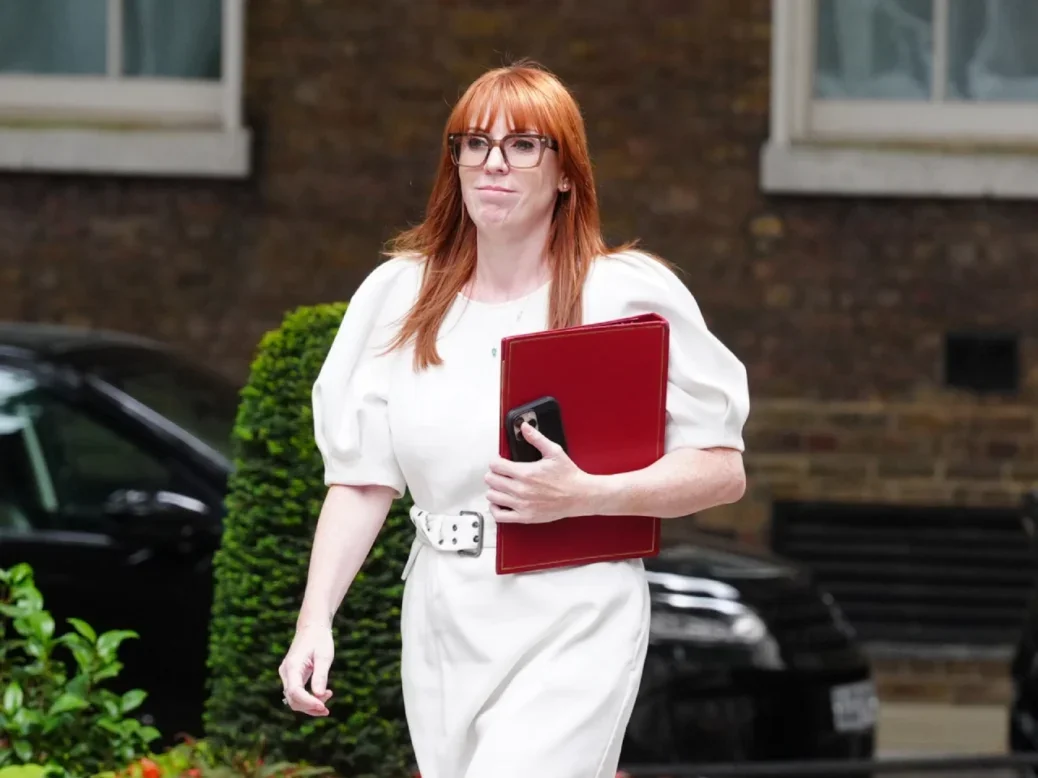
Press regulator IPSO has dismissed a complaint from Housing Secretary Angela Rayner that alleged breach of privacy and harassment against The Sun on Sunday.
Rayner objected to the publication of a photo of her and her partner months after IPSO issued two privacy notices on her behalf to the press.
The first privacy notice, sent out on 7 September last year two days after Rayner resigned as deputy prime minister, asked that the press “do not attend or congregate around her family home or photograph her children” following concerns around photographers outside her Manchester property.
The second notice was sent on 29 October in relation to her property in Brighton and again asked that photographers stopped gathering there and not to “photograph her children, her partner, or her partner’s children”.
Rayner told IPSO she found having press outside her properties “harassing and intrusive”.
The Sun on Sunday later published a large image of Rayner walking hand-in-hand with her partner on page 17 of the newspaper on 1 February as reports circulated about whether she planned to launch a Labour leadership campaign.
The photo came from a freelance photographer who had not been commissioned to get the image. Instead, he said in his account of what happened, he had been in Brighton for an unrelated matter but had passed Rayner’s partner’s property and saw her security car outside.
He then saw them leave the property and walk up the street so he said he went ahead of them and took a photo as they walked towards where he was waiting. They did not see him at the time as a long-lens camera was used.
The Sun on Sunday noted that the couple were in public and that the October privacy notice was not a total ban on further photos. “Rather, it communicated to the media a warning that a right to privacy ‘might’ apply,” the publication told IPSO.
IPSO noted that the photo did not disclose any private information, nor Rayner’s precise location, as well as the fact Rayner’s potential leadership bid “gave her a particularly heightened prominence”.
IPSO therefore found that taking the photo, and its subsequent publication, was not an “unjustified intrusion” into Rayner’s private and family life and said she had not been in circumstances where she had a reasonable expectation of privacy.
Asked to consider whether Rayner had been a victim of “harassment or persistent pursuit” under the Editors’ Code, IPSO noted that the press should not continue to photograph someone after a request to desist but that such a request is “not exhaustive or permanently binding”.
IPSO said the Sun on Sunday photo had not been taken in the vicinity of Rayner’s home, that no children were present, that it was more than two months after the last request to desist, and that it was in the context of a developing news story.
“Though the complainant’s partner had been photographed alongside her, the Committee noted he was not a party to the complaint – and that the privacy notice did not request that the press not photograph the complainant herself,” IPSO said.
Rayner also alleged that journalists for The Sun on Sunday had attended her properties in Manchester and Brighton since the privacy notices were issued, but this was denied by the publication.
Rayner said she believed photographers worked for the newspaper “as it had consistently sought to report what she described as false stories about her”, the IPSO ruling said. But the regulator noted that Rayner “as a prominent national politician was the subject of press coverage by many publications” and declined to rule that anyone had been there on behalf of The Sun on Sunday.
Email pged@pressgazette.co.uk to point out mistakes, provide story tips or send in a letter for publication on our "Letters Page" blog
