

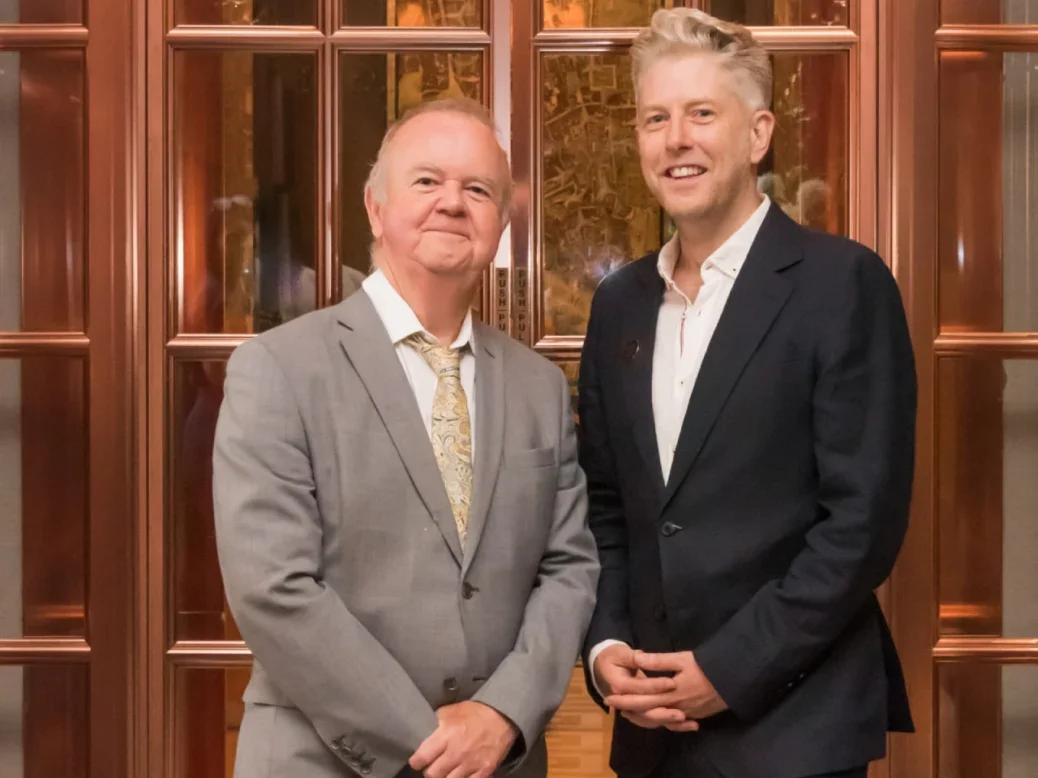
Ian Hislop said he has no plans to leave Private Eye as he marked 40 years as editor.
The fortnightly news and current affairs magazine, which does not publish its content online, has more than doubled its audience of paying subscribers since 2000
In the second half of 2025, Private Eye had a total circulation of 225,642 including 167,518 paying subscribers and 56,224 newsstand sales (broadly level over the last decade).
Hislop spoke about his continued belief in print at an Icons lunch held by the British Society of Magazine Editors (BSME) in London on Friday.
Hislop said: “My optimism about print… has always been rewarded by saying ‘if you make it better, if you make it bigger, it will come’.”
He pointed to adding two dedicated pages for cartoons to the magazine during the Covid-19 pandemic to “cheer people up”.
Hislop also said: “Every time I make a decision which I think is too bold, it seems to be the right one.
“I think timidity is the thing that kills you, and that’s believing that no one will want this, there aren’t any young people who read, there aren’t any young people who write, even the old people are bored, and they’re listening to podcasts. I don’t think any of that is necessarily true.”
He joked that he had read an article about there being “such a choice of podcasts that you can now get a transcript of your podcast…
“That’s called a piece. It’s journalism. We’re back!”
‘I’m not intending to go anywhere’ says Private Eye editor Ian Hislop
Hislop was asked by BSME chair and editor of The Week Junior Science+Nature Dan Green whether he had a plan or date in mind to hand over to a new editor.
Hislop responded: “Fairly simple answer: no.”
He added that he originally planned to edit Private Eye for up to five years and then move on. “Forty years later I looked back, and I thought ‘who were you?’ There isn’t a better job. It’s incredibly good fun and it changes a lot.”
He said it had been important to keep the “ethos and the feel” of the magazine the same while adding new columns and different voices into its pages.
“I’m not intending to go anywhere, but there’s lots of lean and hungry young people in the office, so you never know,” he added.
He also noted that “on the whole, people don’t leave the Eye now. They die or they retire reluctantly.”
Hislop said the magazine has evolved in at least one major way since he took over: “A lot of it was about breaking stories, now it’s about explaining why stories aren’t true.
“There is so much false information out there that print still has a sort of authority, and established titles still have a vague legitimacy that you can say, no, this really didn’t happen… and so we spend a long time now dismembering stories rather than breaking them.”
Private Eye editor Ian Hislop says good magazines feel like clubs
Private Eye features many nicknames and running jokes that are not overtly explained to a new reader but Hislop said this helps regular readers feel like they are part of a select group in the know.
“I do think that magazines, in particular, are clubs. If you do it right, your magazine is a club…
“What you get is if you follow it, if you stick with us, you get these jokes, you enjoy these jokes, you work out I’m not going to read Old Sparky, because he’s writing about the energy supply. It doesn’t matter. Other people will be wanting to read that beat. You don’t have to read Piloti who’s writing about architecture… If that doesn’t interest you, there’s something else on another page. The idea is to offer a great spread of material.”
He added that lunches hosted fortnightly by Private Eye for guests including other journalists, politicians, businesspeople and sources often end up with attendees feeling “this is the sort of club I’d like to belong to”.
Private Eye owner Pressdram Ltd reported on Monday that revenue increased by 2% from £10.8m in 2024 to £11m in 2025 while pre-tax profit was up by 88% from £89,245 to £167,768.
It did however cite increasing publishing costs “that cannot easily be offset by equivalent increases in revenue” and said its gross profit margin was down from 31.3% to 25.4%.
Email pged@pressgazette.co.uk to point out mistakes, provide story tips or send in a letter for publication on our "Letters Page" blog
