

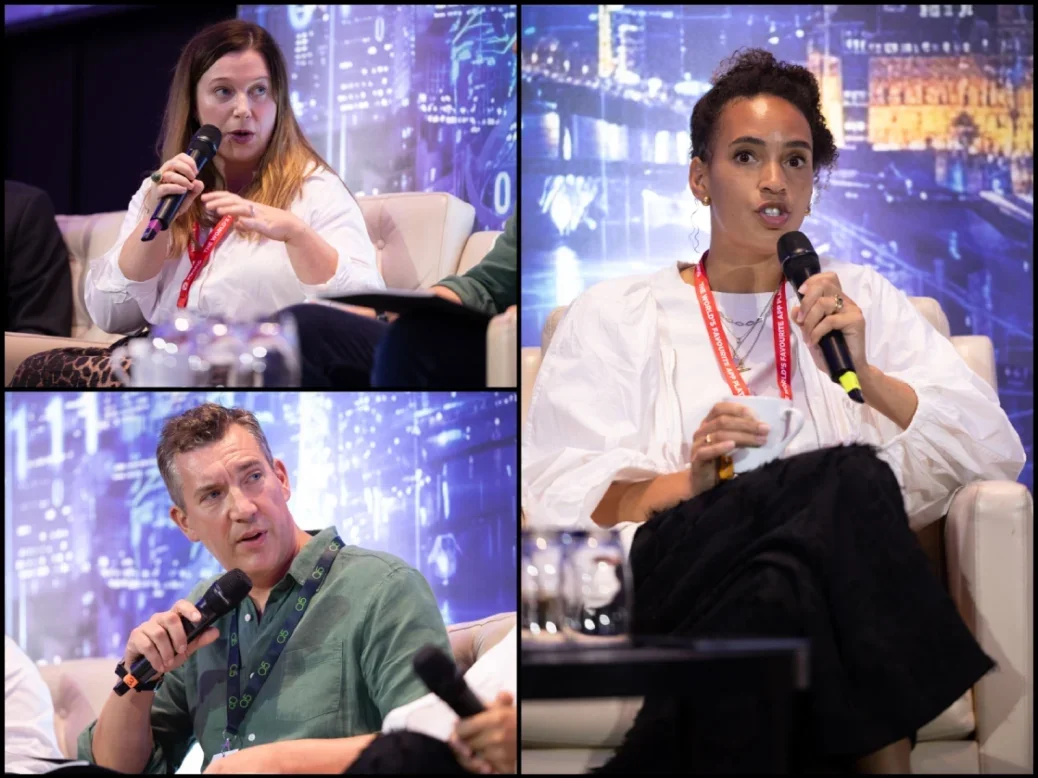
Learning from creators means publishers should be “audience obsessed” rather than “platform obsessed”, Press Gazette’s Future of Media Technology Conference heard.
A Reuters Institute report this year found 76% of senior publishing leaders wanted their staff to behave more like creators, half planned to partner with creators to help them distribute content, and 31% planned to hire creators to help them put out social video.
Graham Page, head of media at Q5, told the event: “That means more personality. They’re asking their journalists to have more opinion, to be quicker in terms of turning things around, they’re going straight to camera and publishing things really quickly to try and compete with the creator economy.”
BBC Studios produces digital content for entertainment brands including Top Gear, BBC Earth, Doctor Who and Bluey and has more than 150 social channels across its portfolio.
It seeks to drive advertising revenue which has shifted from linear TV viewing to digital and social media platforms.
In the year to 31 March, social video revenue at BBC Studios was up 23% year on year with total watch time to its content on Youtube almost doubling to 14.7 billion annual views. The Top Gear Youtube channel’s watch time was up 100%.
Speaking on the panel, senior vice president of digital Jasmine Dawson said BBC Studios had “never been platform obsessed” in terms of where they should be putting out content.
“I think there’s a real danger to that because you sort of go, oh, everyone’s on Substack. What’s our Substack strategy?”
Instead, she said, they were “obsessed” about their audience and that is the “big distinction” between creators versus broadcasters and publishers: “Creators are so obsessed with their audience. They live and breathe in their audience’s world 24/7…
“Obsessing about our audience means that we not only understand them, but we are acting like creators because we are saying they want to hear this on a Monday, but this on a Monday afternoon, this on a Saturday, and this on a Thursday night. And for us, that shapes our content pipeline. That shapes how we have a two-way relationship…
“We’re not on Substack yet for Top Gear. We might be at some point, but ultimately we know where our audience is, and we know how they want to evolve with us.”
Dawson said that although she works on entertainment content, what she has learned would also be applicable to news publishers expanding their social video output.
She said the BBC Studios digital team has “moved away from talking about views” in terms of what works online.
“We want to be able to say that we are keeping our audiences for the time that it takes to actually turn from audience into fans. Watch time is something that we are really, really focused on.”
Dawson also warned it was a “real danger to think that you have to go after young audiences” specifically.
She said: “Know who your audience is. Don’t try and think well, actually, to survive, I need to go after the youth.”
Dawson said they are monetising their presence on platforms in a variety of ways but warned publishers not to “rely” on the commercial models of each social or video platform themselves.
“Do not rely on the CPMs (cost per thousand ad impressions) of Youtube or Tiktok. Make sure you have other lines of revenue that you are controlling.
“We have built over time a dedicated digital sales team that understands our platforms, our brands… they’re going out and selling social and creator-specific branded content, sponsorships, campaigns.”
BBC Studios is also looking at building direct-to-consumer revenue with subscriber content, Dawson said, but she added that this is a small portion and “ultimately, we live in an advertiser-driven world”.
Guardian ‘has trust an individual creator can never have’
The Guardian is building non-news shows that will be inspired by creator tactics but aim to leverage the trust of the legacy newspaper brand.
Guardian Studios is the publisher’s new in-house production arm which has been tasked with creating a new slate of talent-led, long-form video shows for a Youtube audience. The first shows are not quite at the launch stage yet.
Guardian Studios is hiring new staff as part of the publisher’s creation of 55 jobs globally, announced in June, as part of its investment to become “more visual, digital, global and experimental”. TV developer Derren Lawford just joined Guardian Studios as executive producer, development.
Head of Guardian Studios Leah Green told Press Gazette’s Future of Media Technology Conference in London on 10 September that the publisher “has a brilliant history and current output of really brilliant news, video and podcasts” but there is space to reach audiences with more culture, lifestyle, tech, AI and food video content.
Green said being a legacy brand “often gets spoken about as a negative or an albatross around your neck” but said the trust they can leverage means it should not be.
“There’s so much to learn from the creator economy, how they lean into personality, how they create fans as a community,” she said. “But also, one thing that an individual creator can never have is that legacy of a 200 year old newspaper, the trust that comes with that, the reputation that comes with that.
“I think it would be a mistake to try and completely replicate the creator economy. I think it’s about learning and taking the best of it, while also being true to the brand that you have and should be very proud of.”
Green previously worked on Guardian podcasts Today in Focus and Comfort Eating with Grace Dent but had spent a decade away from the newsbrand until returning to lead the studios this year.
She said having someone with experience of the newsbrand in charge was important, as was the fact that when bringing in new staff from outside they are “not throwing out the baby with the bathwater” or loading up on “TikTok news people”.
“That would be a big mistake. I think we have to really think carefully about do we trust these people? Will the audience? There’s a secret sauce… I can’t explain it to you. It’s just kind of all of us being good at our jobs and not making any big boo boos. But I think it’s all about what is Guardian Studios. How close is it to the brand?”
She said they are still in the process of testing out these questions and “doing a lot of thinking and piloting”.
The difference between the new Guardian Studios output and existing Guardian content is that the new shows are being built “around people”, Green said (as well as the fact that they will not be news-oriented).
She said The Guardian has been running many of its multimedia projects for nearly a decade whereas Guardian Studios is “able to start from scratch and take those bits from the creator economy and work with them from the very beginning, rather than sort of do it in retrospect. I think it’s more just about starting with the host, starting with the personality, and building out from that, which is different.”
Guardian Studios content will be monetised via sponsors for the shows and selling ad space. Green described it as “one of the most integrated projects between commercial and editorial that The Guardian has done”.
Advice to publishers: Have diversity and control over revenue
Graham Page, head of media at Q5, said there are four main ways media companies can approach the creator question.
“One is to bite the bullet and invest quite significantly in-house and use your brand and your standing to get your talent to do things in new ways, like [Guardian Studios].
“You can also come up with something completely new outside of your brand. If you’re worried that the value that creators have is not being part of the legacy media world, then maybe creating a brand outside of your own that can still reach out to people and people don’t turn off because they see it’s the BBC or they see it’s The Times.
“And then what we’re also seeing is a mixture of joint ventures or even buying creative businesses.
“So I think there’s a range of strategies that media companies can use to try and do this. They all require a bit of investment, but I think it’s super important that it’s thoughtful about what the strategy is, where the revenue is going to be, and importantly, if you’re going to invest in this, what are you going to stop doing?
“Because the risk with new channels, new platforms, new ideas is that you’re adding and adding and adding, but you’re not really creating much new interesting journalism. All you’re doing is changing the way in which you describe the stories you have, but you’re adding more cost in. So how can you do this in a smart way that doesn’t break the bank.”
Page warned publishers investing in creator-style content “not to become too dependent on somebody else’s channel. I think Substack at the moment is great because if you decide to leave Substack, you can take your customers with you…
“Diversity and having control are the two key points.”
Email pged@pressgazette.co.uk to point out mistakes, provide story tips or send in a letter for publication on our "Letters Page" blog
