


A “shot in the dark” daily news podcast show launched by the Daily Express last year has proved a surprise hit for publisher Reach.
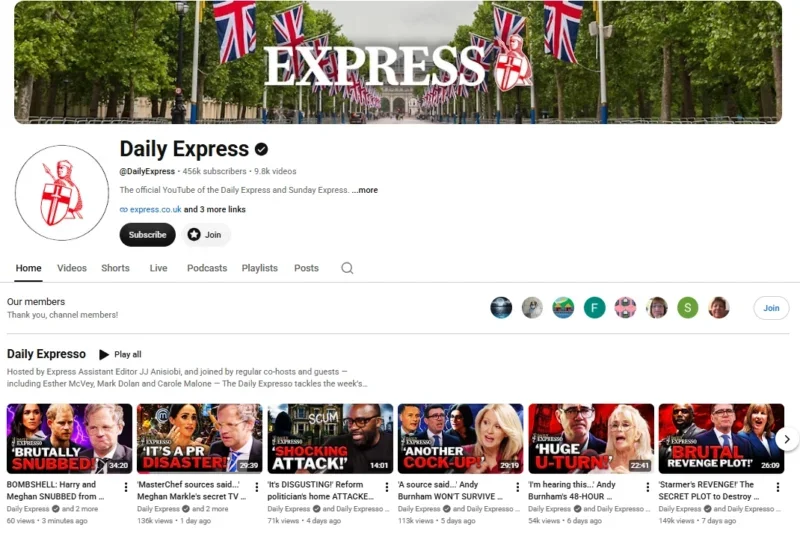
The Daily Expresso racked up 3,388,950 Youtube views in June making it the most-watched UK news podcast on the platform within nine months of its launch.
Its Youtube viewership was ahead of The Telegraph’s The Daily T (3,377,542), The Rest Is Politics (2,916,76) and The News Agents (1,929,728), according to figures from Tubular Labs shared by Reach.
Express deputy editor-in-chief Sam Lister told Press Gazette: “We’re not a TV company, and this was all a little bit of a shot in the dark. But we took the view we know what our readers like, what they’re engaged with, what they’re interested with, and it was just a chance to try and see if we can reach a similar audience on new platforms, and we’ve shown there is an appetite for that.
“The ethos was to make it warm and witty, and informative, and engaging, and move away a bit from that very hectoring, argumentative style that I think people have become a little bit fed up of.”
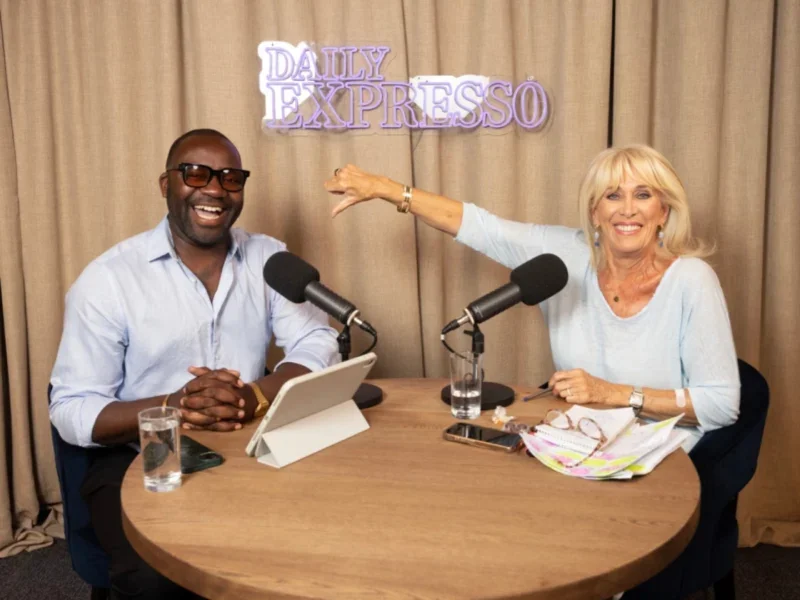
The Daily Expresso is hosted by assistant editor and former TalkTV presenter JJ Anisiobi and has regular co-hosts such as Esther McVey (on Thursdays) and Carole Malone (on Wednesdays) who were both existing Express columnists, as well as Talk presenter Mark Dolan (on Mondays).
Lister said: “For me, it seemed obvious to go within our existing pool of talent and look at who really speaks to our people, who are the voices that really resonate with Express readers, and can we make that work in a different format?”
The Daily Expresso has “regular repeat formats” and co-hosts which Lister said means people come back “because they like that person and they know what kind of information they’re going to get from them”. Episodes are published at 5pm each weekday.
It also runs Express staff-led or special episodes with high-profile guests on Tuesdays and Fridays, for example an interview with ex-prime minister Liz Truss.
Lister originally envisioned the key pillars of the Daily Expresso as politics, royals and showbiz but she said: “Very quickly I realised showbiz was not going to fly for us. It’s just not that kind of audience… you have to be quite responsive and just go where the audience takes you.”
Daily Expresso hosts “can have a good old ding dong” still, she said, but they “don’t have to” – and the idea was that having regular co-hosts instead of constantly rotating panels means there is more chemistry and less constant conflict.
The show launched in September last year but began to take off a few months in after bringing in Express associate editor James Walker and producer Dan Dove to work on the podcast. Lister said they were both “expert in what works on Youtube”.
The Daily Expresso marked its first episode watched by more than one million people in May with an interview with royal biographer Andrew Lownie titled “’This is the END for Andrew!’ Royal biographer LEAKS new evidence”.
The most-watched episode in July, with 352,000 Youtube views, has been “‘Their neighbours said…’ Meghan and Harry BOMBSHELL Exposed” with US journalist Paula Froelich talking about the Sussexes’ life in Los Angeles.
The team made the video thumbnails and titles grabbier and ended the chit-chat that previously opened the show – instead using some of the best moments to pull people in straight away.
Lister said: “On Youtube, you just have to get straight into it… So the hook at the beginning, what’s coming up, crucial, getting straight into the chat, but the relationship, the interaction between JJ and the guest then shines through across the rest of the programme, but you don’t want that at the start. It just slows it down.”
Express owner Reach opened video and podcast studio space in its London headquarters (as well as in some of its regional bases) in early 2025. Previously staff based in the capital had to hire third-party space and equipment, film on Zoom in the open office, and it was therefore difficult to pursue ambitious projects.
Lister described being “at the mercy of the studio that we were renting” for her previous podcast, The Divison Bell: a joint venture between the Express and the Mirror which launched nine days ahead of the 2024 snap general election.
“You couldn’t do it on your own timescale. If something big happened, which obviously as it was a general election, lots of things did, you have to wait two days until you’re booked in.”
The opening of the new Reach studios made Lister want “to get the Express straight in there” and build the format for the Daily Expresso over the next several months.
The Daily Expresso has been able to “respond really quickly to things” as a result of being an in-house facility, Lister said.
A podcast built for Youtube
It is also a full video operation, whereas The Division Bell was “only ever thought of” as an audio product. Although Daily Expresso is available in audio only on podcast platforms, it was built for a Youtube audience. Daily Expresso does not feature in the top 100 UK news podcasts ranked by Podwatch.
“But more than anything, the lesson we learned was you have to have something that will make people come back week in week out, and that cannot be dependent on events,” Lister said.
“So obviously that podcast was about the general election, but once the general election was over, how do you make that format work then?”
She said that for the Daily Expresso they thought about what would work in week 17, and not just for week one and two.
“How do we make it really work for us week in, week out when you have limited time, limited resources? How do you make a format that is engaging, but that we can repeat and we can make it still interesting weeks into the production and then years into it?”
Some changes have been made to the Daily Expresso since it launched last year. Lister said she originally envisioned an interactive Friday episode that got readers involved via Whatsapp or phone-ins.
“Actually, that’s really technically complicated and what we found really was that viewers are really engaged, and they love interacting, but they like to do it in the comments section and you don’t need to overcomplicate it,” she said.
“And you don’t need to make it a big episode all about reading out their views, which is what we did initially, because I just wanted to them to be at the heart of it. You can put them at the heart of it, but in a slightly different way.”
Lister praised Reach for giving staff “the ability to just try things” and giving them “permission to fail in some things, which is quite freeing because then you can really experiment and give things a go.
“So there wasn’t a huge weight of expectation that this show must work because we’ve ploughed so much money into it.”
Although a daily schedule is non-stop, Lister said what helps is avoiding the “TV mindset where you make everything perfect and it has to be highly glossy and very finessed”.
“Every day we’re just looking at the big stories and how can we have our take on that and what will our guests bring to that? But I think that’s what journalists do. If you’re a daily journalist, it’s just in your DNA to operate like that… that worked on Youtube because it brings an authenticity. I think that actually, if you do a glossy TV production, you really lose that.”
The Daily Expresso has started to bring in sponsorship revenue, as referenced in Reach’s half-year financial report published last week. The publisher noted: “Our investment in quality video is yielding results.”
Two sponsors are currently trialling host-read ads and plugs in the Youtube blurbs of the show: personal information removal service Incogni, and adverts in the Youtube comments for bullion investment company Pure Gold.
The latter company has even had Anisiobi endorsing the product on its website homepage.
“Hopefully we can build on that and turn it into something long term,” Lister said. She acknowledged that “a lot of big brands are very careful and cautious and really don’t like to be near politics at all, or news generally” but added that “a lot of smaller companies realise that actually people are interested in the news. They’re engaged with the news.
“If you’ve got really engaged viewers, that’s a really good place to sell your wares. I think it’s a really good opportunity for smaller companies and they’re grabbing hold of that and you can see that across Youtube.”
Reach also benefits from ad revenue shared by Youtube, which is believed to be worth around £5 per 1,000 views for news-related output.

Lister also said the Express has to be “happy as a brand” with a company that wants to sponsor it and that Anisiobi equally would not be forced to promote a business if he was unhappy with it. “It has to be something that works for both sides.”
Daily Expresso also has Youtube memberships priced at £2.99 per month, with ad-free episodes and some videos for subscribers only – for example extra content from royal biographer Lownie.
The Express team currently has one other Youtube show, Express Report which is dedicated to investigations and led by investigations editor Zak Garner-Purkis and is ramping up to a weekly schedule, and is preparing to launch a dedicated weekly royal show in September. Lister said those three should be “rock solid” before any further launches follow.
Email pged@pressgazette.co.uk to point out mistakes, provide story tips or send in a letter for publication on our "Letters Page" blog
