

The 103-year-old news magazine Time is collaborating with social media creators “as if they were columnists” as part of its push into online video.
Time editor-in-chief Sam Jacobs told Press Gazette this has helped the brand’s video views on Youtube grow by 773% in Q2 2026, while Linkedin video views were up 756% in the first half of the year.
In addition, he said, around half of the “traditional text editors and reporters” in the Time newsroom have “contributed meaningfully to social video this year”.
Recent collaborators include Yaya Onalaja-Aliu and Lloyd Griffiths of @handluggageonly who have been visiting some of Time’s World’s Greatest Places as parft of a video series on Instagram.
He noted that Time “always had columnists in the back of the book, and you’d have people who would offer their point of view, and you knew they were personalities. Now we’re collaborating with creators on our feeds as if they were columnists.”
Love Island star Maura Higgins co-hosted the first red carpet livestream for the Time 100 Gala in April (which received 50,000 views on Youtube) while Speedy Morman and Ally Love hosted the equivalent for the Time 100 Sports Gala in July (9,000 Youtube views).
Jacobs said: “We’ve also used creators as what I would traditionally think of as freelancers,” citing a creator called Nico hired to make soccer content in New York during the World Cup.
“It used to be I focused on like ‘okay, I need to get a bunch of feature stories into the magazine or onto the site’ and the truth is this is where the audience is. Let’s hire someone to tell authentic stories about soccer in New York City at the moment when the world’s attention is focused there. That’s been really productive.”
Jacobs added: “You’ll see from us more and more of that type of collaboration and content over the months to come.”
Jacobs said “everyone who works with us has to meet our editorial standards”, including creators that may not have a traditional journalistic background.
“But I also think that’s sort of the wrong posture,” he said, adding that they need to think about “what can we learn from you.
“You’ve been able to generate big audiences, create real relationships. How do we meet in the middle so that we’re respecting our standards, but also emphasising the storytelling that you know and that we can learn from? So it’s got to be a a two-way street there.”
Why working with creators can boost trust at brands like Time
In a recent Yougov survey, Time had a net trust score of 15 across the US political divide, behind only the likes of PBS (26), The Wall Street Journal (22), the Associated Press and the BBC (both on 20), Reuters (19) and Forbes (18).
Jacobs said it would be easy for trusted brands like Time to say “You know what? We’re just going to take our ball and go home. We’re going to step outside of the information space. We’re going to let you all take care of that. If you’re really interested in what’s happening at Time, come to Time.com, buy the magazine, and we’ll give it to you.”
But he said: “That to me is like the height of irresponsibility… if Time wants to have an impact in the world, we need to engage with that space.”
Jacobs also feels that “one of the solutions for a lack of trust in institutions is connecting audiences with the individuals inside those institutions”.
Time, a magazine that originally launched without bylines, is now putting reporters on camera in a more prominent way.
“They can talk through their story in a way that I think creates a huge amount of trust and authenticity,” Jacobs said. “Because one, that’s how people are used to experiencing information today, and two, I think it’s really helpful for us to step out from the red border, as it were, and say this is who’s giving you that information.”
Time senior sports correspondent Sean Gregory walked 13 miles from Penn Station in New York to MetLife Stadium in New Jersey to show the alternative to a $98 train fare charged during the football World Cup, filming his journey. Jacobs said five million people watched that across Time’s platforms.
Jacobs noted that many people think of Time as a “conservative and rigid and establishment institution”.
But “it’s also the same magazine that put cats on the cover and used to do summer issues about ice cream. There’s a kind of whimsy and joy of what we do.”
Time is similarly revamping its newsletters this summer so they are “really personality focused, connecting to the author rather than a more kind of lean back like digest experience”.
Time Studios and events evolve to meet creator revolution
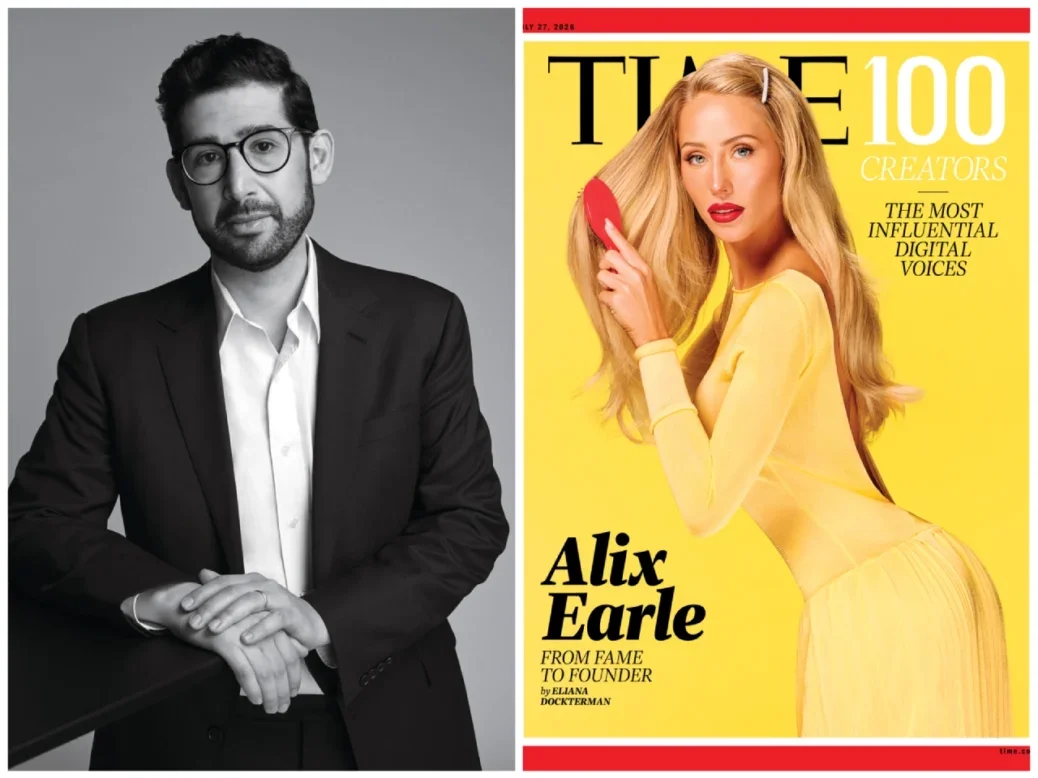
The first Time 100 Creators list was published in July and a Time 100 Creators 2026 Gala was held on Thursday (30 July) which saw 70 out of the 100 featured in attendance.
Time Studios is simultaneously gearing up to launch a long-form interview series with Piers Morgan which will go out across both of their channels with a revenue-sharing agreement.
Until now Time Studios was focused on making documentaries to sell to TV and streaming companies. For example, Time magazine’s ongoing relationship with rapper Megan Thee Stallion helped Time Studios secure access for a documentary about her life which was sold to Amazon for “a very big number”.
Jacobs said: “But in part because of this creator revolution, the business and the attention feels like it’s moved, and a lot of the money has moved into the digital space.”
Time would still be “happy” to speak to TV channels that wanted to pick up Morgan’s show, Jacobs added.
He is aiming to launch a further ten shows based on partnerships in the same vein as Morgan’s in the next two years.
Time Studios is also helping to broaden the audience for and monetise Time’s 40+ annual live events, for example through the red carpet livestreams. “That feels like a huge untapped possibility for us when it comes to journalism storytelling but also kind of audience aggregation and monetisation,” Jacobs said.
Time editor-in-chief ‘bullish’ about social monetisation
Despite the risks of relying on external platforms, Jacobs said the new way of working is bringing in “significant advertising deals” as brands want ads and attention in places like Instagram as part of sponsorship packages for rankings like the Time 100 list of most influential people.
In 2025 (until 20 November), Time’s social media revenue was up 119% due to new branded products and ad formats. Events and digital were projected to make up half of Time revenue this year, up from 28% in 2023.
“Our digital business right now is our fastest-growing business, and what’s driving that is often monetisation on the platforms that exist outside Time.com,” Jacobs said.
“For us, this isn’t like ‘let’s chase some audience that doesn’t actually bring returns to the business’. It’s actually following the obvious opportunities for our business, and so we’re seeing sponsorships across all these channels.
“We’re developing new products like livestreams around our events, we’re able to monetise those through sponsorship, and so it’s actually the place where I feel most bullish this year at this moment.”
Despite this drive for creator-style content and digital growth, Jacobs said Time in print remains “prized” and a “ubiquitous symbol of authority and trust”. They are “confident” about print from a business perspective, he added.
He cited the special cover for the New York Knicks championship win in June which he said was one of Time’s best-selling issues of the past few years.
“People, when they have these moments in time, they want print and they want to be able to hold on to something that they can pass on…
“And when you end up on the cover of Time, you’re now in this conversation with a century’s worth of other human beings, and people love to be part of that.”
Email pged@pressgazette.co.uk to point out mistakes, provide story tips or send in a letter for publication on our "Letters Page" blog
