

Publishers have welcome a ruling from the European Commission fining Google £2.5bn and ordering it to stop abusing its dominant position in the world of adtech.
Daily Mail publisher DMGT is among those to have previously argued Google has been guilty of “punishing publishers that do not submit to its practices” by effectively rigging ad auctions. It filed an antitrust lawsuit against Google in the US in 2021.
The new ruling will also encourage publishers involved in a collective £13.6bn damages claim against Google in the UK for exploiting its monopoly position in online advertising. That claim is expected to go to trial next year.
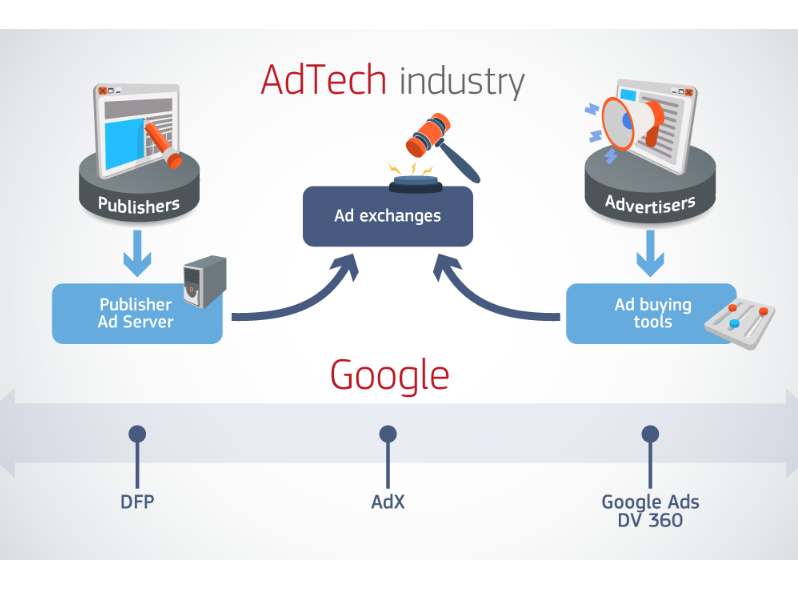
The EC ruled that Google runs the dominant publisher ad server Double Click for Publishers (DFP) and also the dominant programmatic ad buying tool Google Ads DV [display and video] 360.
Google also runs its own advertising exchange AdX which sits between these two other platforms.
The EC ruled that Google favoured its own ad exchange AdX, allowing it to unfairly squeeze out competitors.
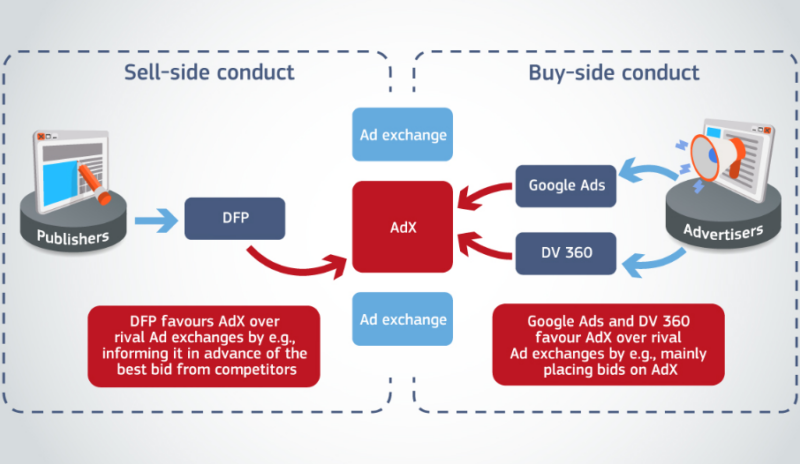
Google has been given 60 days to stop “self-preferencing tactics” and fix the “inherent conflicts of interest” in the way it operates, the EC said. This could involve Google selling off one or more of its ad platforms.
Google has already been found to have abused its digital advertising monopoly in the US and a trial to decide remedies and sanctions will start there on 22 September. The Department of Justice’s proposed remedies including Google being forced to divest AdX.
Google has argued that “the open web is already in rapid decline” and breaking up its business “would only accelerate that decline, harming publishers who currently rely on open-web display advertising revenue”.
European Commission executive vice-president Teresa Ribera said: “Today’s decision shows that Google abused its dominant position in adtech harming publishers, advertisers, and consumers.
“Digital markets exist to serve people and must be grounded in trust and fairness. And when markets fail, public institutions must act to prevent dominant players from abusing their power. True freedom means a level playing field, where everyone competes on equal terms and citizens have a genuine right to choose.”
Google has ‘reduced revenue for publishers’
The European Publishers Council brought the European Commission complaint against Google.
The group’s executive director Angela Wade said: “A fine will not fix Google’s abuse of its adtech. Strong and decisive action by Google to end illegal practices will be crucial, as Google will simply write off the fine as a cost of business.
“As complainants, the EPC will be seeking measures that manifestly change Google’s behaviour and address the core concerns of market foreclosure and the lack of transparency at the heart of Google’s dominance. For too long Google’s tactics have reduced revenues for publishers.”
Timothy Cowen, co-founder of campaign group the Movement for an Open Web, said: “This is a magnificent decision and it’s great to see that the European Commission is standing up for consumers, and for fairness. This should be seen as a signal that the EU will not be intimidated and understands that the rule of law is important.”
Total UK adspend grew 10% to an estimated £42.5bn last year but most of that growth went to Google and Facebook. Online advertising at national newsbrands grew by just 3% and online advertising for magazine newsbrands actually fell 7%.
Press Gazette estimates that Google made at least £20bn in online advertising revenue in the UK last year, more than 20 times the amount spent online with all publishers combined.
Setting out its case against Google in the US in 2021, the Daily Mail’s publisher said: “Google controls the ‘shelf space’ on publishers’ pages where ads appear, and it exploits that control to defeat competition for that ad space.
“Among other tactics, Google makes it difficult for publishers to compare prices among exchanges; reduces the number of exchanges that can submit bids; and uses bids offered by rival exchanges to set its own bids — a de facto bid rigging scheme.
“The lack of competition for publishers’ inventory depresses prices and reduces the amount and quality of news available to readers, but Google ends up ahead because it controls a growing share of the ad space that remains.”
Google head of regulatory affairs Lee-Anne Mulholland said it will appeal against a decision which “imposes an unjustified fine and requires changes that will hurt thousands of European businesses by making it harder for them to make money”.
Google search remedies in the US seen as ‘weak’
Last week Google avoided being forced to sell off its Chrome browser in remedies imposed by a US court to tackle its monopoly position on search. Instead, it was ordered to share certain data with competitors.
The Movement for an Open Web called this ruling “an historic failure that benefits no-one but Google and Apple. The remedies proposed are weak and will only serve to entrench Google’s search monopoly at all levels.”
Email pged@pressgazette.co.uk to point out mistakes, provide story tips or send in a letter for publication on our "Letters Page" blog
