

“The age of the all-powerful anchor is gone,” declared the Press Gazette headline four years ago. Writing three decades after the retirement of ITN’s Alastair Burnet, I argued the decline of the traditional news anchor was imminent, driven by a fragmented media landscape where authority had shifted across platforms, formats, and personalities.
The trust once placed in the anchor’s chair had dissipated. To my surprise, the piece made headlines of its own. Adam Boulton later said he decided to leave Sky News after reading it, acknowledging that the news organisation’s digital and data-led direction was “not a particularly good fit” for his brand of anchor-driven journalism.
The recent death of Burnet’s long-time co-anchor Sandy Gall, another towering presence from ITN’s heyday, prompted me to revisit that article, and to reflect again on what we’ve lost, and what we’ve gained.
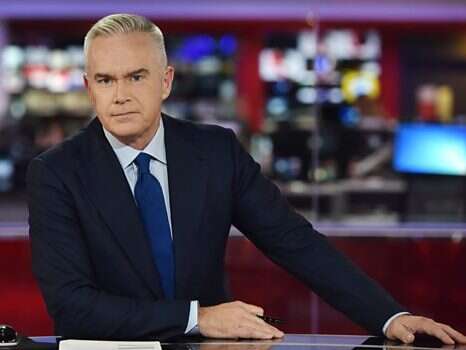
Over the past four years, along with Boulton, a succession of familiar news presenters have vanished from our screens: Alastair Stewart, Dermot Murnaghan, Emily Maitlis, Huw Edwards, Jon Snow, Kay Burley and Kirsty Wark. They have departed for different reasons, most notably Huw Edwards, who pleaded guilty to three counts of making indecent images of children, but it has been an extraordinary exodus of experience in such a short span of time. Now is the post-anchor age.
True, a couple of them make the occasional cameo TV appearance. In their place, only one new face has emerged as a defining presence – the leader of Reform UK and lead presenter of GB News – Nigel Farage. Neither Channel Four chose to appoint a single anchor to replace Snow, instead opting for a quartet of presenters, nor has the BBC named a successor to Edwards as the face of the Ten O’Clock News.
Over the past four years, three major long-running events have dominated the news agenda: Putin’s illegal invasion of Ukraine in February 2022, Hamas’s attack on Israel in October 2023, and the re-election of Donald Trump in 2024. These are consequential, fast-moving stories, too quick for traditional television news. They thrive on WhatsApp in the rapid, pell-mell of digital communication, far beyond the reach of a presenter’s autocue. The video, too, is instantly available on social media. No one needs to wait for the 10 pm bulletin or for the top of the hour on a non-stop news channel.
Writing in 2021, I failed to see how platforms like TikTok would become not only places for commentary, but primary sources of news. We used to think of them as downstream – reacting to journalism. Now they often break stories, set narratives, and drive engagement long before any newsroom camera rolls.
Sky News’s interview with a young Ukrainian soldier guarding a bridge on his own in early 2022 just after the Russian invasion swiftly made the 21-year-old an international sensation. The brief clip on TikTok garnered more than 50 million views. That’s uncomfortable for traditional journalism, because it challenges both our control of the video and our definition of credibility. But ignoring it doesn’t slow it down, it just sidelines television news.
One of the big shifts in the past four years has been the rise of long-form, personality-led podcasts as alternative arenas for public discourse – with America’s Joe Rogan as perhaps the most emblematic case. Rogan’s influence stems not from conventional reporting, but from his ability to provide space for extended, unscripted conversations that often range across science, politics, culture, and conspiracy.
Joe Rogan replaces editorial rigour with unchallenged assertion
His 2024 interview with the then Republican presidential candidate Donald Trump – lasting almost three hours and streamed unmediated to millions – exemplified the shifting power dynamic. It was not a news conference, nor a tough interview by a seasoned presenter like Nick Robinson, but a freewheeling exchange in which narrative control lay squarely with the guest – Trump. The presidential candidate was not an interviewee.
The appeal of such formats lies in their perceived authenticity – in stark contrast to the formulaic conventions of broadcast interviews. The danger is editorial rigour is replaced by unchallenged assertion. This trend is far less developed in the UK than in the States. The News Agents podcast isn’t driving the news agenda. But to dismiss these platforms outright is to miss the deeper signal: the public’s appetite for autonomy in how they consume – and interpret – information.
Watch how podcasters will dominate the next UK General Election. Remember the American futurist Roy Amara’s law on change: “We tend to overestimate the effect of a technology in the short run and underestimate the effect in the long run.”
As a newsaholic since the age of 12, I also failed to grasp the growing phenomenon of news avoidance. According to research from the Reuters Institute for the Study of Journalism, a significant and rising proportion of people – especially younger audiences – are actively avoiding the news. The Reuters Institute research suggests 46 per cent of those it surveyed in the UK sometimes or often avoid the news. Not because they don’t care, but because they find it overwhelming, repetitive, or emotionally exhausting. The intensity and frequency of negative headlines and pictures, combined with the sense of helplessness they provoke, is turning audiences away. This isn’t just a distribution problem – it’s a content and tone issue. If the coverage contributes to a sense of despair rather than agency, people will disengage, not out of apathy, but as a form of self-protection.
But what’s more striking is what has endured.
Despite the collapse of the anchor’s dominance, trust in broadcast news has not followed them out the door.
Ofcom’s most recent research, published in July 2025, has an important message for broadcast news executives. Its ‘News Consumption Report’ suggests that while more people consume their news online than through TV, radio, or newspapers, they still place far greater trust in TV, radio, and legacy print outlets than in digital platforms – especially social media.
This suggests that the authority once vested in the anchor has not been lost, but redistributed – absorbed into the institutional credibility, editorial rigour, and public service ethos that still underpin most UK broadcast journalism.
In a fragmented and fast-moving digital landscape where AI chatbots will be a growing source of news, trust has become one of the few remaining competitive advantages of traditional media. The principle of trust needs to be protected vigourously.
That is why the BBC’s debacle over its documentary “Gaza: How to Survive A Warzone” is so damaging and why its chairman, Samir Shah, called it “a dagger to the heart” of the state broadcaster’s claim to be trustworthy.
Getting the facts right, big and small, matters more than ever in the 2020s.
A version of this article first appeared in the British Journalism Review
Email pged@pressgazette.co.uk to point out mistakes, provide story tips or send in a letter for publication on our "Letters Page" blog
